

Residual stress can create either tension or compression. Compression increases load-bearing capacity, while tension increases the overall load.
Tensile residual stress can accelerate the development of stress corrosion cracking (SCC), in which cracks form in a susceptible material under tensile stress in a corrosive environment. These cracks can cause brittle fractures that lead to sudden, dramatic failure, even when the applied load is well within the material’s capabilities.
Residual stress arises during manufacturing but can also change and develop in service due to deformation and repairs.
In this article, we explore real-life incidents of residual stress to demonstrate the importance of periodic field inspections.
Liberty Ships Fracture Failures

Liberty ships, built during World War II, used a welded rather than riveted construction. At that time, the potential for welding to generate high levels of residual stress wasn’t fully understood. Consequently, the combination of a susceptible material, a corrosive environment, and high stress led to multiple incidents of brittle fracture.
Of the 2,708 Liberty ships built, 1,031 suffered some form of failure, and over 200 sank. The most notable case is that of the Schenectady. Built in Portland, OR, it had just completed sea trials and was moored at a dock when it split in half. Reports say the cracking sound was heard a mile away, and it left the ship in a “hogback” form with both bow and stern touching the river bottom.
Silver Bridge Collapse
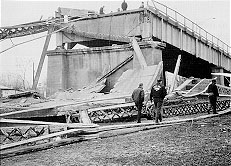
The Silver Bridge, linking Ohio with West Virginia, used a suspension design with eyebar chains (rods with holes at each end) rather than cables, which were cast and then cooled.
In 1967, one of the eyebar chains failed, leading to the complete collapse of the bridge and 46 deaths. An extensive investigation concluded that the eyebar had suffered a brittle fracture. Residual stress from uneven cooling during the casting process contributed to cracking around an eye that led to the failure of a chain and the subsequent bridge collapse.
Hatfield Derailment
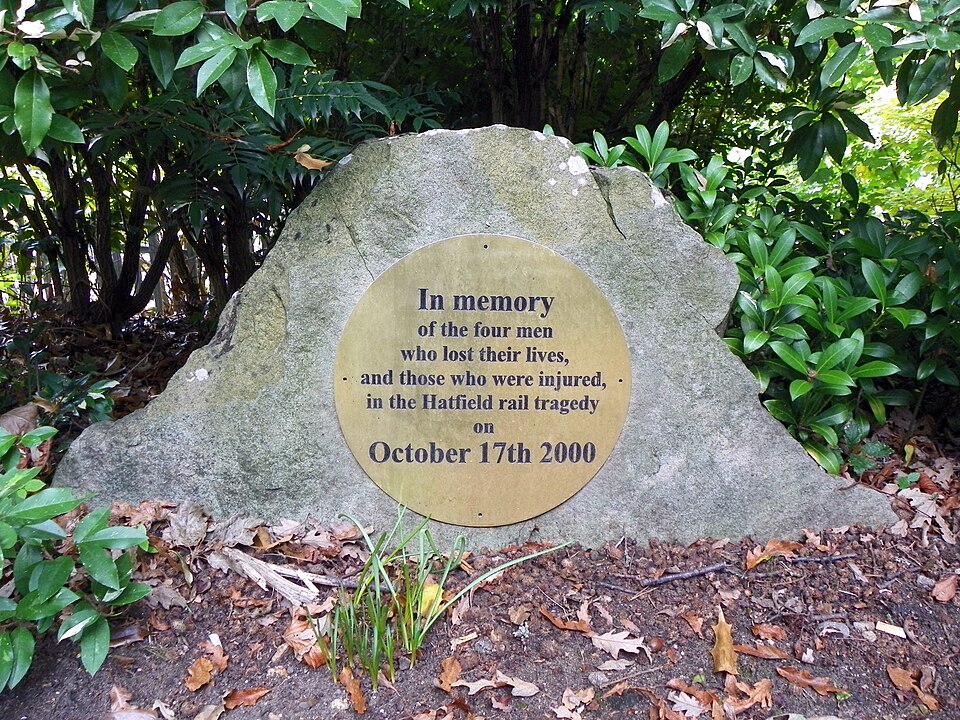
In 2000, four people died when a high-speed train crashed at Hatfield in the UK. The subsequent investigation determined the cause to be multiple vertical cracks in one of the rails that had developed due to rolling contact fatigue (RCF).
RCF develops in situations where extremely high loads are applied briefly but frequently, as when a train wheel rolls along a rail. These high loads generate compressive stresses at the surface, but shear stresses deeper in the rail body. Any tensile residual stress in the rail helps separate the material at grain boundaries, which supports the development of fatigue cracks.
To prevent this, rails are usually manufactured with compressive residual stress. However, repeated cycling and wear can lead to RCF. In the case of rails, the resulting spalling is accelerated by moisture being forced into cracks and can quickly lead to failure.
TC Oil Pipeline
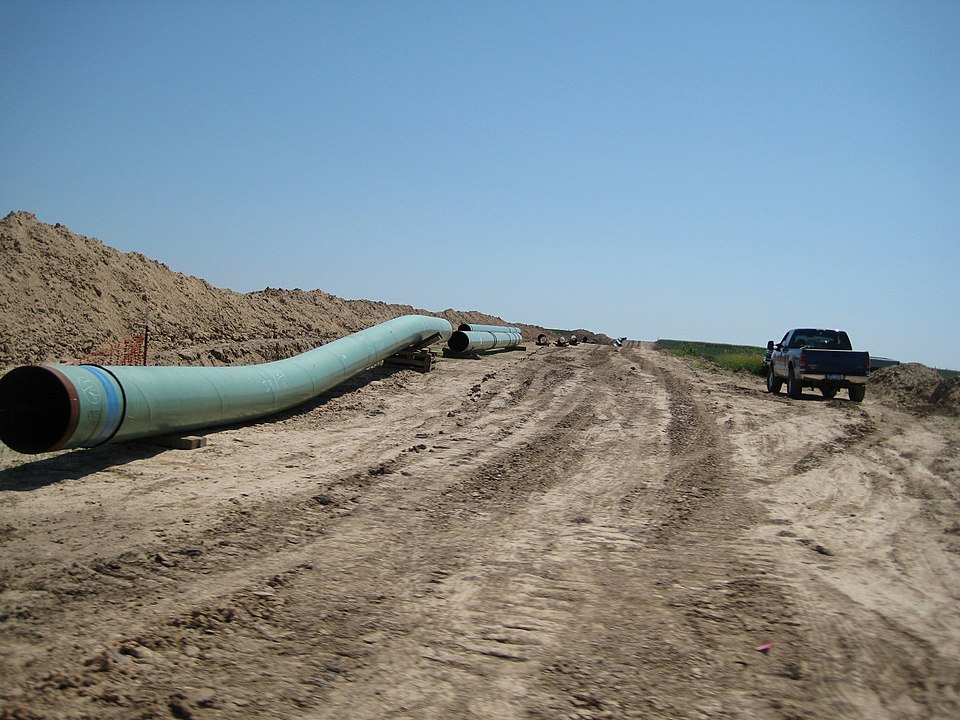
The failure of a circumferential girth weld in this 36” diameter pipe led to an expensive oil spill. An investigation determined that this leak resulted from a combination of multiple factors.
The primary issue was that the pipe had deformed slightly, allowing some movement and creating bending stress at the weld. This issue stemmed from the pipe being excavated to replace fittings that were found to have been out of specification after installation, and it appeared that soil around the deformed area had not been properly compacted.
There were also signs of prior repairs being done to the weld, which can introduce residual tensile stress that reduces the weld’s ability to handle the increased stress from the bending. Had a field inspection been performed after the weld repair, the increased level of residual stress would most likely have been detected.
Marathon Pipeline
A relatively recent Marathon Pipeline incident showcases another example of a girth weld failure in a pipe that field residual stress measurement may have prevented. In this case, the failure was localized and appeared to have resulted from SCC.
Two important points are that the pipeline was constructed in the 1940s, before the advent of modern welding standards, and there was evidence that the weld had been repaired. This indicates that while the initial welding may have created high levels of tensile stress, it’s highly likely that the repair compounded the problem. Add in a susceptible material and a corrosive environment, and SCC becomes almost inevitable.
Prevent Critical Incidents With Reliable Field Measurements
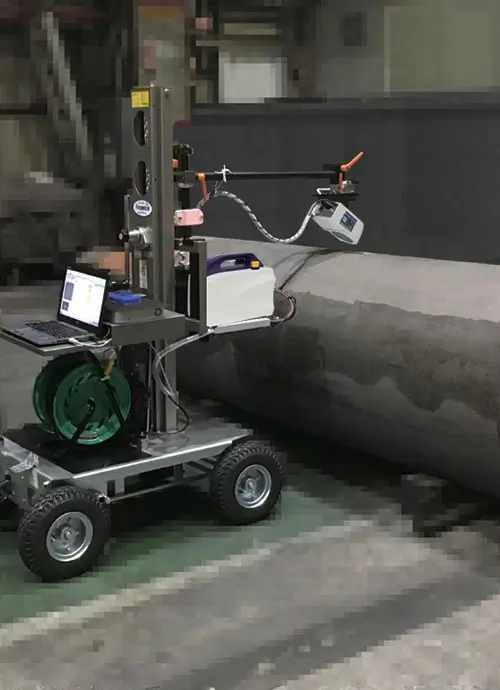
These examples of accidents caused by residual stress, or where residual stress was a significant contributor, underscore the importance of ongoing field inspections. However, this requires portable equipment capable of performing nondestructive analysis quickly and under varying environmental conditions.
X-ray diffraction (XRD) is an established nondestructive technology, and when the cosα technique is used, it’s both fast and repeatable. The μ-X360J portable X-ray residual stress analyzer was developed by Pulstec as a tool for both in-lab studies and field inspections of critical infrastructure. Its predecessor, the μ-X360s, was the first commercially available analyzer to use the cosα technique rather than the traditional sin2𝜓 method.
When purchased for field inspection, the μ-X360J is available with a hand-carry case, a tripod, and a shielding box to prevent radiation leakage.
If you’re interested in learning more about how our μ-X360J analyzer can help maintain critical infrastructure, contact us today to get started with a free virtual demonstration.